
2nd Annual Fusion Fest
14-04-2026
London, 14 April 2026. The financial magazine The Economist organised its second annual Fusion Fest in the City of London. 688 participants gathered in an anonymous but chic office and conference building next to the “middle-class brutalist” Barbican Estate: the biggest and arguably most controversial housing project in the city developed after the Second World War.
The participants at this conference weren’t interested in the scientific challenges of fusion. It was assumed they have been solved or will be solved in due time. A few paid attention to fusion’s engineering issues under the condition that money can be made solving them. The lion’s share of participants aimed to understand how money can be made with fusion technology.
Fusion is no longer just a scientific project. Now that around 10 billion euros of private investments is flowing into the sector and “futurists” plot fusion on their horizons, fusion initiatives have to relate themselves not only to the laws of nature but, perhaps more challenging, also to the laws of capitalism.
They do so in different manners: General Fusion will go public on the Nasdaq as the second fusion company ever. They use a so called SPAC to this end, that raised several questions from the Fusion Fest participants. Following the advice of venture capital (VC) investors, Commonwealth Fusion Systems (CFS) and several other initiatives are ensuring their key innovation can be used in other markets (just in case, you know, fusion might not work out as expected). CFS and Tokamak Energy furthermore become suppliers to other fusion initiatives, later announced to work on the superconducting magnets for the UK Fusion Energy (recently UKIFS) under a new 70 million pound contract. Others, like Helion Fusion, bet on the demand of big tech giants like Microsoft to buy their future energy to fuel AI datacenters. Helion does not care to contribute scientifically or socially to the broader community. Their only aim is to generate fusion energy for Microsoft in 2028. They are “laser-focussed” as they call it, and they can be under the laws of capitalism.
The second annual Fusion Fest gives an indication what the much desired private leadership in the fusion community will look like. The pace with which the private sector will take over and shape fusion energy will be decided by the family offices, pension funds, and VCs that are now weighing if fusion is worth there money. He who pays the piper calls the tune, and The Economist understands this very well.
By David van Walderveen
More event reports
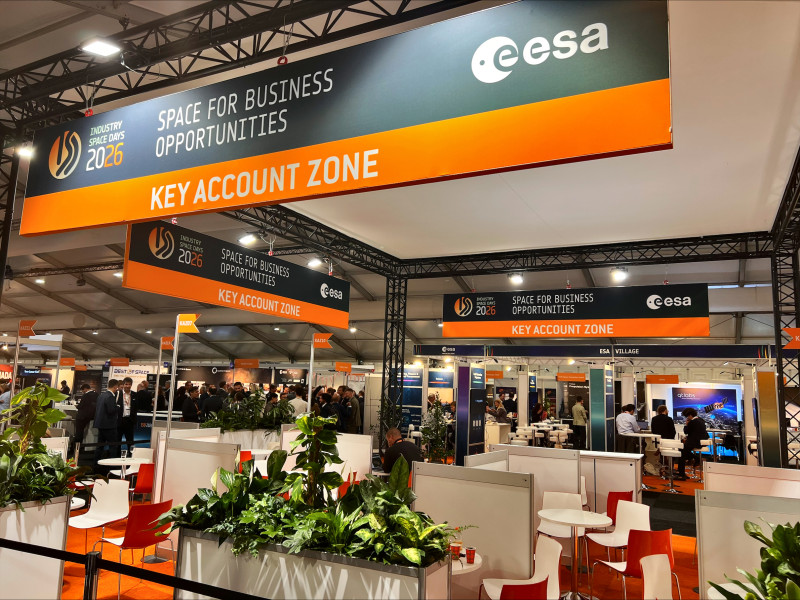
ESA Industry Space Days 2026: record turnout, strong Dutch presence
The 12th ESA Industry Space Days (ISD) took place on 16-17 September 2026 at ESTEC in Noordwijk, and was the largest edition to date. Around 240 exhibitors and more than 3,000 participants attended, representing 1,500 companies from across the European space sector. Attendees pre-arranged over 10,000 pre-arranged business to business meetings, with many more face-to-face encounters on site. More than 50 presentations were delivered across three conference halls.
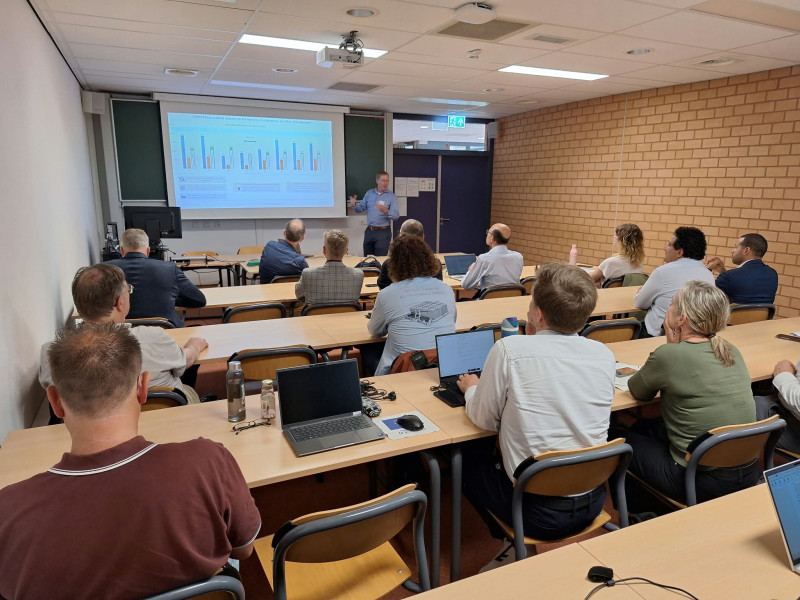
On 2 September, BigScience.NL brought together representatives from industry and research organisations at HFML-FELIX in Nijmegen for an industry meeting dedicated to sustainability. Marc Baldus, Director of HFML-FELIX and profile holder for sustainability within the Dutch NWO institutes, opened the meeting and set the stage for open and lively discussions on this important and timely topic.
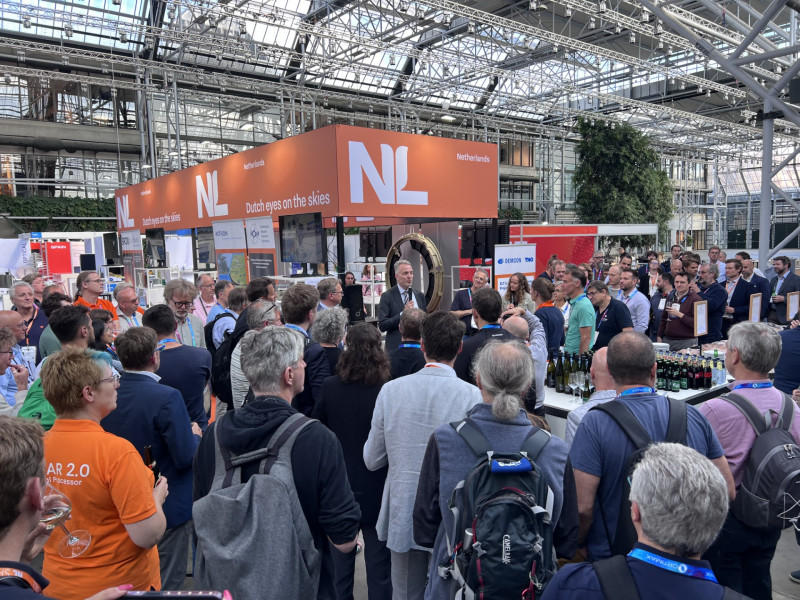
Dutch Astronomical Instrumentation Community Shines at SPIE 2026 in Copenhagen
5–10 July 2026, Copenhagen, Denmark
The astronomical engineering world gathered in Copenhagen for SPIE Astronomical Telescopes + Instrumentation, the leading international conference on ground-based, airborne, and space-based telescopes and the instruments that power them. The event drew more than 3,000 attendees from across the globe, who took part in 13 simultaneous technical conferences featuring over 3,000 presentations on the latest research, technology, and project developments in astronomical instrumentation.